


Reliability: Encompasses the dual requirements of dependability and security; the relay must absolutely not fail to operate when a fault occurs within its protection zone, nor must it operate erroneously under non-fault conditions. Design priorities are balanced based on grid structure: in tightly interconnected large-scale grids, priority is given to ensuring operation (avoiding failure to trip), whereas in weakly connected grids with insufficient reserve capacity, priority is given to security (avoiding nuisance tripping).
Selectivity: Ensures that only the faulty component is isolated upon operation, thereby minimizing the scope of power outages. By coordinating settings and operating time delays between upstream and downstream protection devices, the system achieves precise isolation of the fault point and prevents unnecessary outages in non-faulty areas.
Speed: Clears faults as rapidly as possible, compressing fault duration to the millisecond range. Rapid operation significantly reduces equipment damage, maintains the stability of the power system's parallel operation, and minimizes the time users spend operating under low-voltage conditions.
Sensitivity: Possesses sufficient responsiveness to all faults within the protection zone. It reliably detects fault signals even under minimum system operating modes or in scenarios involving high transition resistance; sensitivity coefficients must meet the minimum requirements stipulated by national standards.
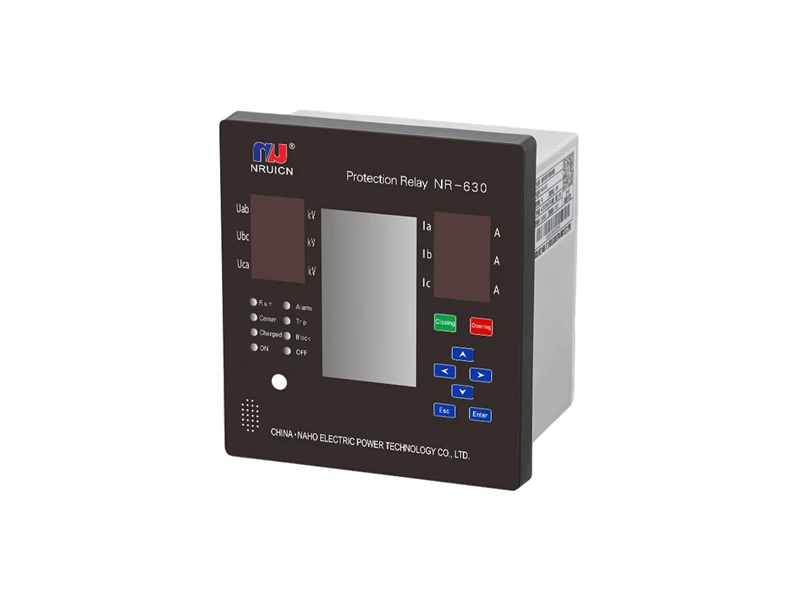
System-Level Adaptive Design Philosophy
Layered Collaborative Protection: Employs a dual-layer architecture comprising primary protection and backup protection. Primary protection ensures rapid fault clearance; "near-end" backup protection serves as redundancy for the device's own primary protection, while "remote" backup protection acts as a safety net for adjacent equipment, creating a fault protection system with no blind spots.
Comprehensive Operating Scenario Coverage: Designs fully account for maximum and minimum power system operating modes. Through setting calculations, the system ensures correct operation across all extreme scenarios-including various short-circuit types, transition resistances, and load fluctuations.
Modular Functional Architecture: Adopts a standardized structure consisting of measurement, logic, and execution components. The measurement unit handles electrical quantity acquisition and setting comparisons; the logic unit performs fault diagnosis; and the execution unit issues trip or alarm commands. This approach ensures functional consistency and maintainability across different types of protection.