


Core Fundamental Principles
Electromagnetic Induction Principle: The core of traditional electromechanical protective relays. A magnetic field generated by an electromagnetic coil drives the mechanical contacts; the response time can reach 0.02 seconds-ten times faster than the blink of an eye-enabling rapid fault isolation.
Bimetallic Strip Thermal Effect Principle: The core technology of thermal protection relays. It utilizes the property of bimetallic strips (composed of metals with different expansion coefficients) to bend when heated, simulating the heating process of motor windings. This provides inverse-time protection characteristics that closely match the motor's thermal behavior.
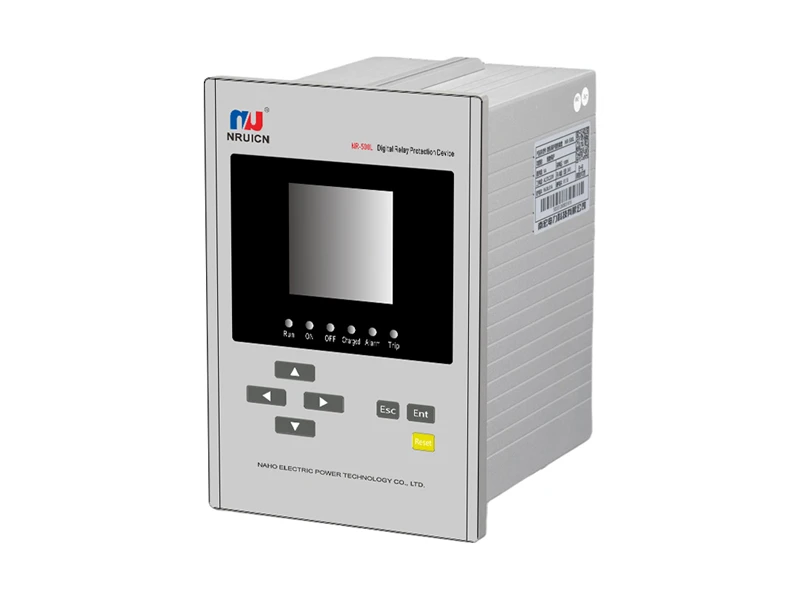
Microprocessor Digital Sampling Principle: The mainstream technology for modern intelligent protective relays. High-speed acquisition of voltage and current waveforms occurs via A/D conversion ports, while algorithms such as zero-crossing detection and Fourier analysis are used to precisely calculate parameters like phase difference and RMS values, enabling high-precision fault diagnosis.
Key Specialized Protection Technologies
Isolation Protection Technology
Categorized into mechanical isolation and electrical isolation: Mechanical isolation achieves physical disconnection between input and output terminals via mechanical switches, suitable for low-power DC relays. Electrical isolation relies on isolation transformers, capacitors, and resistors to completely isolate electrical signals; widely used in high-power AC applications, it significantly enhances the system's anti-interference capability.
Solid-State Relay Short-Circuit Protection Technology
Includes two mainstream implementation methods: The voltage drop detection method triggers a power cutoff by monitoring the sudden voltage drop signal during a short circuit. The current limit protection method employs a current-limiting circuit at the output terminal to keep the current within safe thresholds, preventing semiconductor power devices from burning out due to overcurrent.
Phase Sequence and Phase Loss Protection Technology
Early designs used resistor-capacitor (RC) phase-shifting networks to identify phase sequence. Modern digital products operate by comparing three-phase phase differences in real-time (in a normal positive sequence, each phase lags the previous one by 120°) and simultaneously detecting voltage unbalance. They act rapidly-within 100ms-in the event of incorrect phase sequence or phase loss, preventing motor reverse rotation or burnout caused by single-phasing. Inverse-time overcurrent protection technology
A core overcurrent protection feature where the protection trip delay decreases as the fault current increases, precisely matching the thermal withstand curve of the electrical equipment; combined with instantaneous protection components, it enables instantaneous tripping at 500% to 1500% of the rated current.